
In the competitive landscape of metal fabrication, cost efficiency is a cornerstone of sustainable operations—whether for large-scale manufacturing plants or small workshops. When it comes to tube end forming equipment, two technologies dominate the market: hydraulic Tube end forming machines and electric (servo-driven) tube end forming machines. Both offer distinct advantages in performance, but manufacturers often face the critical question: Which delivers greater long-term cost savings? The answer hinges on a detailed analysis of upfront investment, operational expenses, maintenance costs, energy consumption, and productivity—factors that vary based on production volume, application requirements, and operational scale.
Upfront Investment: Balancing Initial Costs
The first cost consideration for manufacturers is the upfront purchase price, where hydraulic and electric machines present clear differences. Hydraulic tube end forming machines typically have a lower initial investment, making them an attractive option for small to mid-sized fabricators or those with limited capital. Their simpler mechanical design—relying on hydraulic pumps, cylinders, and fluid systems—translates to lower manufacturing costs compared to electric machines, which integrate advanced servo motors, precision controllers, and digital automation components. Electric machines, by contrast, carry a higher upfront price tag, reflecting the complexity of their servo-driven systems and smart technology integration. For businesses prioritizing short-term budget constraints or low-volume production, hydraulic machines may seem the more cost-effective choice at the outset.
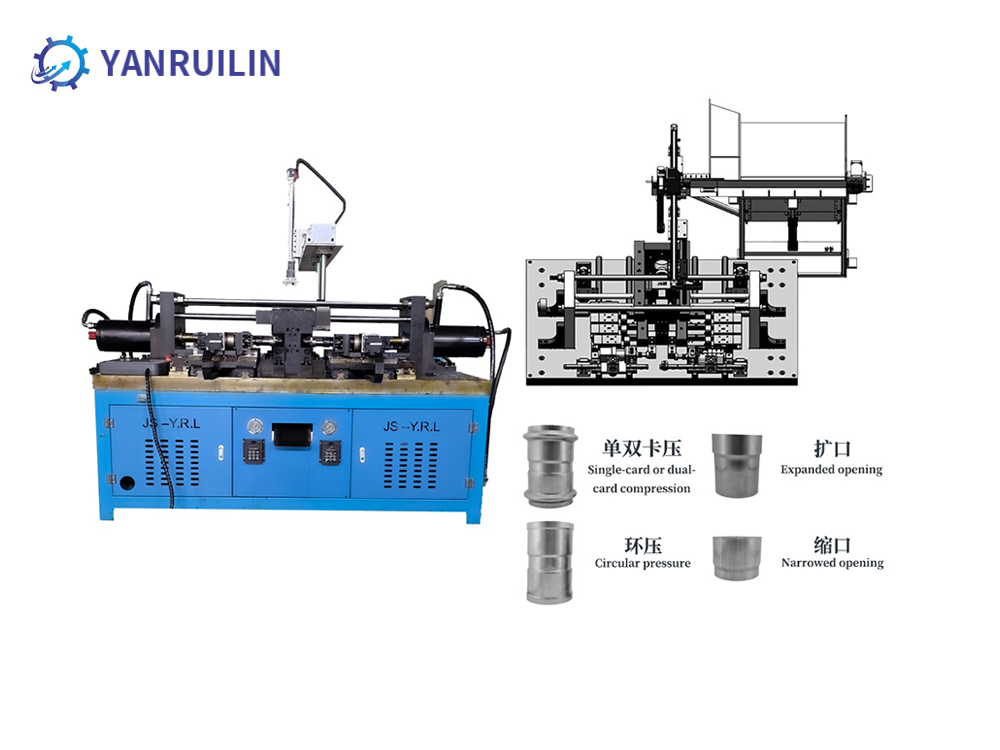
Operational Costs: Energy Efficiency Takes Center Stage
While hydraulic machines offer lower upfront costs, electric models gain a significant edge in operational energy consumption—one of the largest ongoing expenses for manufacturing equipment. Hydraulic systems operate by maintaining constant fluid pressure, even during idle periods, leading to continuous energy waste. In contrast, electric servo-driven machines use a “demand-based” power delivery system, consuming energy only when actively forming tubes. This difference results in a 30-50% reduction in electricity usage for electric machines compared to hydraulic counterparts. For high-volume production facilities running 24/7, this translates to substantial monthly savings on utility bills. For example, a hydraulic machine consuming 15kW of power continuously may cost hundreds more in electricity per month than an electric machine consuming 8kW during active operation. Over years of use, these energy savings can offset the higher upfront cost of electric machines.
Maintenance Costs: Long-Term Durability and Upkeep
Maintenance expenses are another critical factor in total cost of ownership. Hydraulic tube end forming machines require regular upkeep of their fluid systems: oil changes, filter replacements, and leak repairs. Hydraulic fluid degrades over time, and leaks can lead to additional costs—including wasted fluid, environmental cleanup, and potential damage to other equipment. The mechanical components of hydraulic systems, such as pumps and cylinders, also face wear from constant pressure, requiring periodic replacement. Electric machines, with their simpler mechanical structure (fewer moving parts, no hydraulic fluid), have significantly lower maintenance requirements. Servo motors and digital controllers are designed for long-term reliability, with minimal upkeep needed beyond occasional cleaning and software updates. While hydraulic machines may have lower maintenance costs in the short term, electric models offer greater durability and reduced long-term maintenance expenses, especially for high-usage applications.
Productivity and Waste Reduction: Indirect Cost Savings
Cost savings extend beyond direct expenses to include productivity gains and waste reduction—areas where electric machines often outperform hydraulic models. Electric tube end forming machines deliver higher precision (micron-level tolerances) and consistent results, reducing material waste caused by defects or misformed components. Hydraulic machines, while capable of precise forming, may suffer from slight variations in pressure delivery, leading to higher scrap rates—especially when working with high-value materials like stainless steel or titanium. Additionally, electric machines offer faster cycle times and quicker changeovers between production runs, thanks to their servo-driven speed and programmable controls. This increased productivity allows manufacturers to process more components per shift, boosting revenue potential. For high-mix, high-volume production, the reduced waste and increased throughput of electric machines translate to significant indirect cost savings that compound over time.
Application Suitability: Matching Machine to Needs
The cost-effectiveness of hydraulic vs. electric machines also depends on the specific application. Hydraulic machines excel in heavy-duty forming tasks—such as processing thick-walled tubes (≥5mm) or high-strength materials—where their high force output (often 200-500kN) is essential. For these applications, hydraulic machines may offer lower costs per unit due to their ability to handle demanding tasks efficiently. Electric machines, meanwhile, are ideal for precision-focused applications, thin-walled tubes, or low-to-medium volume production where energy efficiency and minimal waste are priorities. Small workshops or fabricators with variable production needs may find hydraulic machines more cost-effective, as their lower upfront cost and versatility suit occasional heavy-duty tasks. Large-scale manufacturers with consistent high-volume production will likely benefit more from electric machines, as their energy and maintenance savings, combined with higher productivity, deliver greater long-term value.
Total Cost of Ownership: The Bottom Line
When evaluating total cost of ownership over a 5-10 year lifespan, the choice between hydraulic and electric tube end forming machines becomes clear: electric machines offer greater overall cost savings for most high-volume, long-term operations, while hydraulic machines remain a cost-effective option for budget-constrained or heavy-duty, low-volume applications. For manufacturers prioritizing short-term costs or specialized heavy-duty tasks, hydraulic machines provide a practical solution. However, for those focused on long-term efficiency, reduced operational expenses, and productivity gains, electric machines are the more economical choice—their higher upfront investment offset by energy savings, lower maintenance costs, and reduced waste.
In the debate over which saves more money, there is no one-size-fits-all answer. Manufacturers must assess their production volume, application requirements, budget constraints, and long-term goals. Hydraulic tube end forming machines offer lower upfront costs and excel in heavy-duty tasks, while electric machines deliver superior energy efficiency, lower maintenance expenses, and higher productivity. By aligning the machine’s capabilities with their specific needs, manufacturers can maximize cost savings and achieve sustainable profitability in tube end forming operations.
As manufacturing technology continues to evolve, both hydraulic and electric machines are becoming more efficient, but the core cost dynamics remain: hydraulic machines for short-term value and heavy-duty use, and electric machines for long-term savings and precision-focused production. For forward-thinking manufacturers, investing in electric technology may require a larger initial outlay, but the cumulative cost savings—from energy, maintenance, and productivity—make it a strategic decision that pays dividends over time.
यह वेबसाइट यह सुनिश्चित करने के लिए कुकीज़ का उपयोग करती है कि आपको हमारी वेबसाइट पर सर्वोत्तम अनुभव मिले।

 English
 Español
 Pусский
 Deutsch
 日本語
日本語 한국어
한국어 Italiano
 Türk dili
 Indonesia


टिप्पणी
(0)